May.17,2026
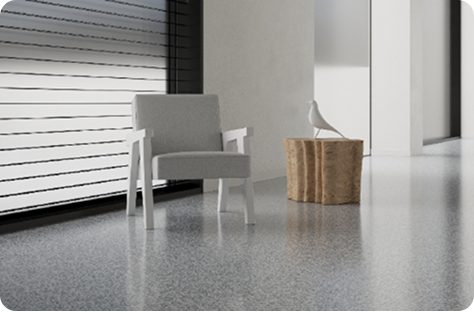
What Is Microcement and Where Can It Be Applied? Microcement is a thin cement-polymer coating applied in multiple layers to create a continuous decorative surface over floors, walls, stairs, countertops, furniture, and selected outdoor areas. It usually contains cement, fine mineral aggregates, polymers, pigments, and additives, with the final surface protected by a compatible sealer. I consider it a practical finish for renovation projects where the owner wants a low-build, joint-minimized appearance, but wet rooms still require correct waterproofing, substrate preparation, sealing, and maintenance.
!
Microcement is a decorative cementitious coating system rather than a single thick layer of concrete. A typical system combines a bonding primer, reinforcement or base coat where required, one or more microcement layers, a fine finishing coat, and a protective sealer. The complete build is commonly only a few millimeters thick, which allows it to be installed over many existing surfaces without the demolition required for a new concrete slab.
The cement provides mineral hardness, while polymers improve adhesion, flexibility, and workability. Fine aggregates create the texture, and pigments provide colors ranging from pale gray and warm beige to charcoal, terracotta, and muted green. The visible result depends on the product formulation, trowel movement, layer thickness, sanding method, pigment concentration, and sealer sheen.
As a Microcement Manufacturer, Vanlei represents the type of supplier buyers should evaluate by examining the complete installation system rather than judging a sample panel alone. I would review the technical data sheet, recommended substrate conditions, layer sequence, curing intervals, sealer compatibility, slip-resistance information, and cleaning instructions before selecting any product.
Microcement applications cover both horizontal and vertical surfaces, but suitability depends on movement, moisture, heat, impact, chemical exposure, and the quality of the existing substrate. I would not treat every surface as interchangeable because a bathroom floor, a kitchen backsplash, a staircase, and an exterior terrace place different demands on the coating system.
| Surface or location | Suitability | Main preparation requirement | Primary risk | Finish consideration |
|---|---|---|---|---|
| Interior walls | Generally suitable | Clean, stable, dry substrate | Hairline movement cracks | Smooth, textured, matte, or satin finishes |
| Living-room floors | Suitable with the correct system | Level, rigid, well-bonded base | Cracking from movement | Slip resistance and abrasion resistance |
| Bathrooms | Suitable when fully specified | Waterproofing and sealed junctions | Water intrusion or sealer failure | Low-slip texture and compatible topcoat |
| Shower walls | Suitable with a wet-area system | Continuous waterproof backing | Water penetration behind coating | Reduced texture for easier cleaning |
| Kitchen backsplashes | Generally suitable | Degreased, stable wall | Grease staining or impact | Cleanable satin or matte sealer |
| Countertops | Possible with a reinforced system | Rigid support and edge detailing | Heat, impact, and staining | High chemical and heat resistance required |
| Stairs | Suitable for stable structures | Reinforced corners and sound substrate | Edge damage and slip risk | Defined nosing and controlled texture |
| Furniture | Suitable for selected pieces | Stable, prepared panels | Chipping at exposed edges | Thin decorative finish with protective sealer |
| Commercial interiors | Suitable after system selection | Tested substrate and traffic assessment | Abrasion and maintenance load | Commercial-grade wear and slip requirements |
| Outdoor areas | Conditional | Drainage, movement joints, climate review | Freeze-thaw and weather exposure | Exterior-rated system and maintenance plan |
Microcement can be used in small bathrooms because it avoids the visual interruption of many grout lines and can continue from a wall onto a floor when the system is designed for that transition. However, the coating itself should not be treated as the only waterproofing layer. Shower areas need a properly designed waterproof substrate, sealed penetrations, controlled falls toward drains, and a sealer system approved for prolonged water exposure.
For kitchens, I would distinguish between walls, floors, and countertops. A kitchen wall or backsplash usually presents fewer mechanical and thermal stresses than a countertop, which may receive hot pans, knives, acidic foods, oils, and repeated cleaning. Microcement for kitchen countertops therefore needs specific information about heat resistance, stain resistance, edge protection, and repair procedures rather than a general interior-wall specification.
The installation process begins with an inspection of the substrate. The surface must be stable, clean, dry where required, free from grease, and sufficiently level for the intended finish. Cracks, loose tiles, hollow areas, dampness, movement joints, and weak paint layers must be identified before coating begins because microcement follows defects that remain below it.
A typical application sequence includes the following stages:
Can microcement be applied over tiles? In many renovation situations, yes, but only when the tiles are firmly bonded, clean, dry, and sufficiently stable. Joints may need leveling, loose tiles must be removed, and movement or moisture problems must be corrected first. Applying directly over unstable tiles can transfer cracks, create hollow areas, or cause delamination regardless of the quality of the decorative coating.
A DIY installation is possible for a small, low-risk decorative project, but it requires control over mixing, layer thickness, drying time, sanding, and sealing. I would be cautious about DIY work in showers, wet rooms, floors with movement, staircases, countertops, and commercial spaces because installation defects can affect waterproofing and long-term service life. Professional installation is usually justified when the substrate is complex or when the cost of removing and replacing the finished surface would be high.
Microcement is not automatically waterproof simply because it contains cement. A correctly specified system can resist water when the substrate, waterproofing layer, coating, junction details, and sealer work together. Waterproof performance depends on the complete assembly, including corners, drains, pipe penetrations, floor-to-wall transitions, and the condition of the final sealer.
For a bathroom or shower, I would request written confirmation that the product system is suitable for wet areas and ask how often the sealer should be inspected or renewed. Standing water, aggressive cleaning chemicals, poor ventilation, and damaged sealers can reduce performance over time. A sealed surface may resist routine splashes while still failing if water reaches an unprotected joint or a crack beneath the coating.
Microcement and tiles solve similar surface-finishing problems but involve different installation and maintenance requirements. Tiles provide established water-management details, replaceable units, and a wide selection of formats, while microcement creates a continuous appearance with fewer visible joints. The right decision depends on the substrate, water exposure, design objective, repair expectations, and total installation budget.
| Factor | Microcement | Tiles |
|---|---|---|
| Visual continuity | Continuous finish with minimal visible joints | Grout lines divide the surface |
| Renovation thickness | Low-build system suitable for many overlays | Often requires removal or additional buildup |
| Waterproofing | Depends on the complete system and sealer | Depends on substrate waterproofing and grout details |
| Repairs | Local repair may remain visible | Individual tiles can often be replaced |
| Substrate movement | Requires careful assessment and reinforcement | Flexible systems and grout selection also matter |
| Texture and color | Trowel variation, pigments, and sheen options | Factory-controlled patterns, colors, and formats |
| Cleaning | Fewer joints can reduce grout maintenance | Grout may require more frequent cleaning |
| Installation skill | Sensitive to layer control and sealing | Sensitive to layout, cuts, adhesive, and grout |
| Cost structure | Labor and preparation can represent a large share | Tile material, removal, adhesive, and labor vary widely |
I would choose microcement when a continuous appearance, low-build renovation, and coordinated wall-to-floor design are priorities. I would choose tiles when replaceability, established wet-area detailing, highly standardized patterns, or heavy localized impact are more important. Polished concrete is generally better suited to a structural slab or a newly cast concrete surface, while microcement is more adaptable for thin renovation overlays.
Microcement cost per square foot varies according to the product system, labor, substrate condition, number of layers, waterproofing requirements, sealer specification, project size, and geographic labor rates. A small bathroom may cost more per square foot than a large open floor because mobilization, corners, drains, masking, and detail work are distributed across less area. I would request a written quotation that separates preparation, waterproofing, materials, labor, protection, sealing, and any substrate repairs.
| Cost factor | Why it changes the price |
|---|---|
| Surface preparation | Repairing cracks, leveling joints, or removing weak coatings adds labor |
| Existing tile overlay | Saves demolition but may require joint filling and reinforcement |
| Wet-area waterproofing | Adds membranes, corner treatment, drainage details, and testing |
| Product specification | Specialized floor, countertop, or exterior systems may cost more |
| Sealer type | Higher chemical, abrasion, or water resistance can increase material cost |
| Project size | Small areas often have higher unit costs |
| Geometry | Stairs, niches, curved walls, and many edges require additional labor |
| Access and protection | Occupied or commercial sites may need extra setup and protection |
| Maintenance plan | Periodic resealing or specialist cleaning may affect total ownership cost |
Rather than comparing only the quoted material price, I compare the full installed cost with alternatives such as tile, paint, polished plaster, stone, waterproof wall panels, or polished concrete. A lower initial quote may exclude substrate repair or final sealing, while a higher quote may include testing, reinforcement, and a defined maintenance schedule. The most useful comparison is based on the same area, preparation scope, waterproofing standard, finish level, and warranty conditions.
Microcement has practical limitations that should be assessed before purchase. Movement in the substrate can produce cracking, sharp impact can damage exposed edges, excessive heat can affect some sealers, and polished finishes may become slippery when wet. Outdoor applications also require review of freeze-thaw exposure, drainage, ultraviolet exposure, expansion joints, and the suitability of the product for local weather conditions.
Harsh chemicals can stain or dull the protective sealer, especially when left on the surface for extended periods. I recommend using the cleaning products specified for the system, removing standing water where practical, avoiding abrasive pads, and repairing damaged sealers before moisture reaches the coating layers. Maintenance should include routine cleaning, visual inspection of high-use areas, and resealing according to the manufacturer’s service guidance.
For commercial interiors, I would also review trolley traffic, footwear abrasion, cleaning frequency, disinfectant exposure, and expected repair downtime. A decorative finish designed for a residence may not be appropriate for a restaurant kitchen, retail corridor, hotel bathroom, or healthcare area. The product selection should match the actual traffic and cleaning regime rather than relying on appearance alone.
I use a simple decision process before recommending microcement. First, I identify the surface and its movement risk; second, I classify moisture, heat, impact, chemicals, and traffic; third, I define the required texture, color, and sheen; and finally, I compare the complete installed cost and maintenance obligations with other finishes.
| Project condition | More suitable choice | Reason |
|---|---|---|
| Stable interior wall needing a decorative finish | Microcement or polished plaster | Both can create mineral texture; microcement may provide greater floor compatibility |
| Shower with complex waterproofing requirements | Tile or a tested wet-area microcement system | Tile may simplify replaceability; microcement requires complete system control |
| High-impact commercial floor | Commercial tile, resin, or specified microcement | The traffic and repair model must guide selection |
| Existing stable tiles during renovation | Microcement overlay or new tile overlay | Microcement may reduce demolition and finished buildup |
| Structural concrete slab with a polished finish goal | Polished concrete | The slab itself becomes the finished surface |
| Countertop exposed to heat and sharp tools | Stone, compact surface, or specialized microcement | Heat, impact, and stain data are essential |
| Exterior surface with freeze-thaw exposure | Exterior-rated tile, stone, or tested coating | Climate compatibility is more important than visual continuity |
| Need for individually replaceable units | Tile or stone | Damaged pieces can usually be removed and replaced |
When I assess a product from Vanlei or another Microcement Manufacturer, I look for a complete installation specification rather than a color chart alone. The important documents include application thickness, substrate limits, primer requirements, reinforcement guidance, drying times, sealer compatibility, cleaning instructions, and performance data relevant to the intended location. A sample board can show texture and color, but it cannot by itself prove suitability for a shower, countertop, exterior terrace, or high-traffic floor.
What Is Microcement and Where Can It Be Applied? Microcement is a thin cement-polymer coating system that can create a continuous decorative finish on walls, floors, bathrooms, kitchens, stairs, furniture, and selected commercial or outdoor surfaces. Its main advantages are low buildup, broad color and texture control, and the ability to renovate many existing substrates without extensive demolition.
I would treat surface preparation, waterproofing, sealing, movement control, slip resistance, and maintenance as equally important as the appearance. Microcement is a strong candidate for stable interior surfaces and carefully designed wet-area renovations, but tile, stone, polished concrete, paint, polished plaster, or waterproof panels may be more suitable in other conditions. Before choosing a system from Vanlei or another supplier, compare the technical specification, installation method, substrate requirements, maintenance plan, and complete microcement cost per square foot with the alternatives.
Related News
Jun.20,2025
Construction Guide | Learn how to install terrazzo in three minutes
Jie terrazzo's new product launch: Jie terrazzo is a bit more expensive, but a hundred times better. Now you have a basic understanding of Jie terrazzo.
Jun.20,2025
Construction Guide | Learn how to install terrazzo in three minutes
Jie terrazzo's new product launch: Jie terrazzo is a bit more expensive, but a hundred times better. Now you have a basic understanding of Jie terrazzo.
Jun.20,2025
Construction Guide | Learn how to install terrazzo in three minutes
Jie terrazzo's new product launch: Jie terrazzo is a bit more expensive, but a hundred times better. Now you have a basic understanding of Jie terrazzo.
Related Products