May.17,2026
The most popular decorative wall paint finishes include matte, eggshell, satin, semi-gloss, gloss, metallic, limewash, textured coatings, Venetian plaster, microcement, and faux-concrete effects. Standard sheen finishes suit everyday rooms and maintenance needs, while specialty systems create stronger visual texture, mineral variation, or stone-like surfaces for feature walls and commercial interiors.
!
I classify decorative wall finishes into two groups: conventional paint sheens and specialty surface systems. Matte, eggshell, satin, semi-gloss, and gloss are primarily selected by reflectivity, cleaning needs, and resistance to visible wall defects. Metallic, limewash, textured coatings, Venetian plaster, microcement, and faux-concrete effects are selected for their surface character as well as their practical performance.
The right choice depends on room function, natural and artificial lighting, wall condition, moisture exposure, cleaning frequency, budget, and installer skill. A low-sheen finish can hide small surface irregularities, while a polished finish can make minor ridges, patches, and roller marks more visible. Specialty systems also require more controlled preparation because the final appearance depends on application pattern, layer thickness, drying time, and protective coating.
Matte paint generally reflects little light and is one of the most effective options for reducing the visibility of minor dents, patched areas, and uneven drywall. I commonly recommend it for ceilings, bedrooms, low-contact living rooms, and accent walls where frequent scrubbing is not expected. Its lower sheen also produces a softer appearance under direct lighting.
The main limitation is cleanability. Repeated rubbing can burnish the surface or create visible marks, particularly with low-cost interior formulas. A typical planning range is $25–$60 per gallon for paint materials, while professional application may add $1.50–$4 per square foot depending on preparation and the number of coats.
Eggshell and satin are practical decorative wall paint finishes for homeowners who want moderate reflectivity with better cleaning performance than flat paint. Eggshell usually has less sheen and is more forgiving of wall imperfections, while satin reflects more light and is commonly used in hallways, kitchens, family rooms, and other high-traffic areas.
For most interior walls, satin is often the most versatile paint finish because it balances wipeability, color depth, and durability. It is not ideal for heavily uneven walls because side lighting can reveal surface variations. Material costs commonly range from $30–$70 per gallon, with installation often adding $2–$5 per square foot when patching and priming are required.
Semi-gloss and gloss finishes provide higher reflectivity and are easier to wipe clean than matte or eggshell coatings. I usually reserve them for trim, doors, cabinetry, bathrooms with adequate ventilation, utility areas, and selected accent walls rather than broad living-room surfaces. Their reflective film can increase the visual intensity of a saturated color.
These finishes expose preparation defects more clearly than low-sheen products. Every joint, sanding mark, roller edge, or uneven patch may become more visible when light strikes the wall at a shallow angle. Material pricing commonly falls between $35 and $80 per gallon, while professional labor may reach $3–$7 per square foot when the substrate needs extensive correction.
Metallic paint uses reflective pigments to create bronze, silver, copper, pearl, or colored-metal effects. It works particularly well on feature walls, niches, reception areas, dining rooms, and small architectural details where controlled lighting can reinforce the finish. Metallic coatings should normally be applied over a smooth, uniformly primed surface because overlap marks and roller direction can remain visible.
A clear protective topcoat may be appropriate in high-contact areas, but the topcoat can change the original sheen or reduce the metallic effect. Material packages commonly cost $60–$180 per gallon, and professional installation may range from $5–$15 per square foot because application technique and surface preparation have a greater effect on the result.
Limewash is a mineral-based finish that creates soft variation, cloudy movement, and a breathable surface appearance. It is suitable for bedrooms, living rooms, dining areas, historic interiors, and designs that favor natural tonal movement instead of uniform color. Limewash can be especially useful where vapor permeability is important, although the exact performance depends on the substrate, formulation, and protective treatment.
The wall must usually be mineral-compatible or treated with an appropriate primer. Limewash is less resistant to repeated scrubbing than acrylic satin paint, and touch-ups may blend differently because the finish depends on brush movement and absorption. Material costs commonly range from $40–$120 per gallon, with professional labor often reaching $5–$12 per square foot.
Textured wall coatings contain mineral particles, fibers, aggregates, or specialized additives that create a tactile surface. They can be used to add visual depth, disguise moderate substrate variation, or produce effects such as sand, stone, suede, travertine, or brushed plaster. Texture paint is different from standard paint because the coating contributes physical relief rather than only color and sheen.
Textured finishes are not automatically suitable for every damaged wall. Deep cracks, loose plaster, and movement-related defects still require repair before coating. Material costs often range from $45–$150 per gallon, while installed pricing may range from $5–$18 per square foot depending on texture depth and the number of decorative layers.
Venetian plaster is a polished plaster system made from fine mineral powders and binders. It is applied in several thin layers and compressed or burnished to create depth that can resemble marble, stone, or polished limestone. The finish is usually selected for feature walls, foyers, boutique interiors, restaurants, and formal living spaces.
Unlike ordinary decorative paint, Venetian plaster requires controlled trowel work, careful sanding or burnishing, and often a wax or protective sealer. It does not hide major wall defects; in fact, a polished surface can emphasize poor preparation. Installed costs commonly range from $10–$30 per square foot, with service life often exceeding 10 years when protected and maintained correctly.
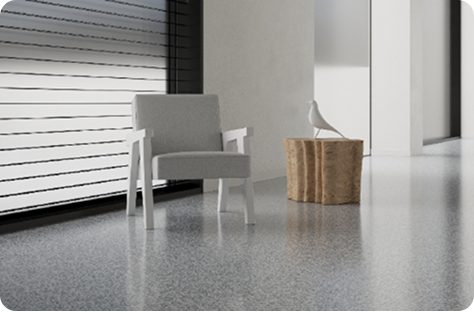
Microcement is a thin cementitious coating system designed to create a continuous concrete-like surface over prepared walls and, in some systems, floors or wet-area substrates. It is commonly chosen for minimalist interiors, bathrooms, kitchens, retail spaces, and industrial-style feature walls. Faux-concrete paint effects can create a similar visual impression at lower material cost, but they usually lack the physical depth and layered mineral structure of microcement.
Microcement typically requires a compatible primer, base layer, leveling or reinforcement treatment, decorative layers, and a protective topcoat. Installed pricing often ranges from $12–$35 per square foot, while faux-concrete paint effects may range from $5–$15 per square foot. Moisture exposure, movement, joint treatment, and topcoat selection should be assessed before use in bathrooms or splash-prone areas.
I use five practical questions when selecting a finish: How much traffic will the wall receive, how much light will hit it, how smooth is the substrate, how often will it be cleaned, and what visual effect is required? This approach is more reliable than choosing by color alone because the same color can appear substantially different in matte, satin, metallic, or polished finishes.
| Room or condition | Suitable finishes | Main reason | Caution |
|---|---|---|---|
| Bedroom | Matte, eggshell, limewash | Low glare and soft visual texture | Avoid heavy scrubbing systems unless needed |
| Living room | Eggshell, satin, limewash, plaster | Balanced appearance and moderate durability | Test samples under daytime and evening light |
| Hallway | Satin, washable eggshell, textured coating | Better resistance to contact and cleaning | Satin can reveal wall unevenness |
| Bathroom | Satin, semi-gloss, sealed microcement | Moisture resistance and wipeability | Ventilation and substrate sealing remain essential |
| Accent wall | Metallic, gloss, Venetian plaster, faux concrete | Stronger visual focus and material contrast | Preparation defects become more visible |
| Small space | Matte, eggshell, light satin | Controls glare while maintaining brightness | Very dark gloss can make defects prominent |
| Rental home | Removable-compatible paint systems, matte, eggshell | Easier future repainting and restrained cost | Avoid complex systems without owner approval |
Wall condition should influence the decision as much as room function. Matte and eggshell finishes conceal minor imperfections better than satin, gloss, metallic paint, or polished plaster. If the wall has repaired joints, uneven suction, or old roller texture, I would first skim, sand, spot-prime, and apply a uniform primer before choosing a reflective finish.
Preparation usually determines whether a decorative finish looks consistent. I begin by removing loose paint, cleaning grease and dust, filling cracks and fastener holes, sanding raised edges, and checking whether the existing coating is sound. New decorative layers should not be applied over chalking paint, active moisture, loose wallpaper, or uncorrected movement cracks.
Primer compatibility is especially important for limewash, metallic coatings, microcement, and plaster systems. Porous substrates may absorb the binder unevenly, while glossy existing paint can reduce adhesion. A compatible bonding or penetrating primer can regulate absorption, improve adhesion, and reduce patchiness, but the manufacturer’s technical data should determine the final primer choice.
For major repairs, I allow the filler and primer to dry fully before applying the decorative coating. A repair that appears invisible under matte paint may remain obvious under satin, metallic, Venetian plaster, or faux-concrete effects. Sample panels measuring at least 2 by 2 feet are useful because they reveal how lighting, application direction, and wall texture affect the finished appearance.
Maintenance depends on the binder, sheen, traffic level, cleaning method, and protective layer. For most painted walls, I recommend soft microfiber cleaning with diluted neutral detergent rather than abrasive pads or concentrated solvents. Matte and limewash surfaces generally need gentler cleaning, while satin and semi-gloss acrylic finishes tolerate more frequent wiping.
Touch-ups are easiest when the original batch, color formula, sheen, application tool, and substrate preparation are recorded. Metallic, limewash, Venetian plaster, and textured finishes may not blend perfectly with a small isolated patch because the visual result depends on movement, pressure, aggregate distribution, and absorption. For visible repairs, repainting an entire wall or recreating the decorative section may produce a more uniform result.
A conventional interior acrylic finish may require recoating after approximately 5–10 years in normal residential use. High-contact corridors and kitchens may need earlier renewal, while protected plaster and microcement systems can remain serviceable for 10–15 years or longer when the topcoat is intact. These are planning ranges rather than guarantees because humidity, sunlight, impact, cleaning frequency, and substrate movement can shorten service life.
The total budget includes coating, primer, tools, masking materials, repairs, protective topcoats, and labor. DIY application can reduce labor costs by roughly 40%–65%, but specialty finishes may require practice panels, additional material, and correction work. A simple 150-square-foot accent wall may cost $100–$350 for DIY conventional paint, compared with $750–$2,250 for professional metallic, plaster, or microcement work.
| Finish type | Typical material cost | Typical installed cost | Best budget use |
|---|---|---|---|
| Matte or eggshell | $25–$70 per gallon | $1.50–$5 per sq. ft. | Bedrooms and general walls |
| Satin or semi-gloss | $30–$80 per gallon | $2–$7 per sq. ft. | Kitchens, hallways, and bathrooms |
| Metallic | $60–$180 per gallon | $5–$15 per sq. ft. | Feature walls and details |
| Limewash | $40–$120 per gallon | $5–$12 per sq. ft. | Mineral-style living spaces |
| Textured coating | $45–$150 per gallon | $5–$18 per sq. ft. | Concealing moderate variation |
| Venetian plaster | $70–$200 per gallon or kit | $10–$30 per sq. ft. | Polished architectural features |
| Microcement | $80–$250 per system kit | $12–$35 per sq. ft. | Continuous concrete-style surfaces |
These ranges vary by region, wall condition, project size, number of coats, and whether the contractor includes repairs and sealing. Smaller projects usually have higher per-square-foot pricing because setup, masking, travel, and cleanup are spread across less area. I would request a written scope that identifies preparation, primer, decorative layers, topcoat, drying time, and warranty terms.
For indoor use, I compare water-based and mineral-based systems by odor, VOC content, curing behavior, permeability, and moisture exposure. Water-based acrylic coatings commonly produce less odor than solvent-based systems, but the product label and safety data sheet should be checked for actual VOC information. Low VOC does not eliminate the need for ventilation during application and curing.
Lime-based finishes can support vapor movement when applied to compatible mineral substrates, while acrylic films and sealed microcement systems may reduce permeability. That difference matters in older masonry buildings, basements, and walls with a history of moisture. No decorative finish should be used to conceal active leaks, rising damp, condensation, or unresolved waterproofing problems.
Metallic pigments, cementitious powders, primers, and topcoats can have different handling requirements. I recommend reviewing the technical data sheet, safety data sheet, recoat window, moisture limitations, and recommended protective equipment before application. For bedrooms, nurseries, and occupied commercial interiors, schedule adequate ventilation and curing time before regular use.
For a warm living room, I would consider eggshell, limewash, or a soft textured finish in a low-contrast color range. For a bedroom, matte paint or limewash can reduce glare and create a quieter surface. A hallway may benefit from satin or washable eggshell because repeated contact and cleaning are more likely.
For a dramatic accent wall, metallic paint, Venetian plaster, or faux-concrete effects can create a stronger focal point than standard color alone. Microcement is more appropriate when the desired result is a continuous, joint-reduced surface rather than a painted illusion. In a small room, I usually test a light matte or eggshell sample first because excessive gloss can reflect unevenly and make the space feel visually busy.
Vanlei is presented as a Decorative Coatings Manufacturer offering decorative paints, limewash, texture paint, stucco finishes, microcement systems, primers, sealers, and topcoats. Its published company information describes a Guangdong production base of 10,000 square meters, 13 national invention patents, 150 product models, export coverage across 68 countries and regions, and market-access certificates in 12 countries. I would still evaluate any specific product by its technical data, coverage rate, VOC information, substrate requirements, and local compliance documentation rather than by category claims alone.
Use this sequence when comparing decorative wall paint finishes:
What Are the Most Popular Decorative Wall Paint Finishes? The most widely used options are matte, eggshell, satin, semi-gloss, metallic, limewash, textured coatings, Venetian plaster, microcement, and faux-concrete effects. I recommend choosing by room function, wall condition, lighting, moisture exposure, cleaning frequency, desired sheen, maintenance plan, and available installation skill.
For a cost-controlled residential update, eggshell or satin usually provides the most practical balance. Matte works well where glare and visible imperfections are the main concerns, while metallic, plaster, limewash, and microcement are better suited to feature areas that justify additional preparation and labor. Before purchasing, test a sample, verify primer compatibility, review VOC and moisture information, and request a complete cost breakdown that includes repairs, decorative layers, sealing, and cleanup.
Related News
Jun.20,2025
Construction Guide | Learn how to install terrazzo in three minutes
Jie terrazzo's new product launch: Jie terrazzo is a bit more expensive, but a hundred times better. Now you have a basic understanding of Jie terrazzo.
Jun.20,2025
Construction Guide | Learn how to install terrazzo in three minutes
Jie terrazzo's new product launch: Jie terrazzo is a bit more expensive, but a hundred times better. Now you have a basic understanding of Jie terrazzo.
Jun.20,2025
Construction Guide | Learn how to install terrazzo in three minutes
Jie terrazzo's new product launch: Jie terrazzo is a bit more expensive, but a hundred times better. Now you have a basic understanding of Jie terrazzo.
Related Products