May.17,2026
From residential lofts to luxury retail, the seamless coating is redefining modern minimalism
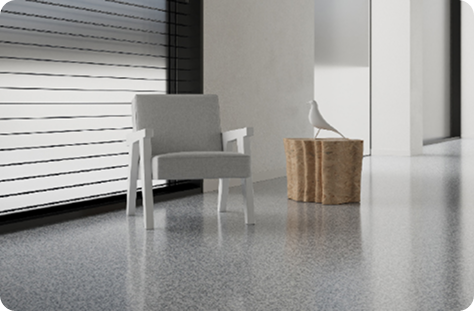
The construction and interior design sectors are witnessing a quiet revolution as microcement transitions from a niche European specialty to a global mainstream material. Valued for its seamless finish, ultra-thin application, and remarkable durability, this polymer-modified cementitious coating is increasingly specified for projects ranging from high-end residential renovations to large-scale commercial developments.
Unlike traditional tile or stone installations that require thick mortar beds and extensive demolition, microcement can be applied directly over existing surfaces—including ceramic tiles, marble, wood, and even heated flooring systems. With a typical thickness of just 2 to 3 millimeters, the material eliminates the need for costly substrate removal, significantly reducing construction waste and renovation timelines. This lightweight property also makes it an ideal solution for projects where structural load is a concern, such as older buildings or high-rise residential towers.
Industry observers note that the accelerating demand is closely tied to the global embrace of minimalist and industrial design aesthetics. Microcement offers a monolithic, joint-free surface that imparts a sense of spaciousness and continuity, making it particularly popular for open-plan living areas, bathrooms, and kitchens. Its natural, matte finish—available in a broad spectrum of earth tones, grays, and custom pigments—complements both warm organic interiors and cool contemporary spaces. Leading design firms report that clients are increasingly requesting microcement for feature walls, staircases, and even exterior facades, drawn by its ability to create a bespoke, hand-crafted look without the maintenance challenges of natural stone or the clinical feel of polished concrete.
Sustainability is emerging as the primary driver of this market expansion. As green building certifications such as LEED and BREEAM gain prominence worldwide, specifiers are turning to microcement for its low environmental footprint. The material requires substantially less raw material than traditional concrete overlays, and its ability to be applied in thin layers reduces overall cement consumption—a critical factor given that the cement industry accounts for approximately 8% of global CO₂ emissions. Furthermore, many modern microcement systems incorporate recycled aggregates and utilize water-based, low-VOC (volatile organic compound) resins, contributing to improved indoor air quality during and after installation.
The material’s performance characteristics are equally compelling. When properly sealed with specialized polyurethane or epoxy topcoats, microcement surfaces exhibit exceptional resistance to abrasion, impact, and thermal shock. They are waterproof, impermeable to stains, and remarkably easy to maintain, requiring only routine cleaning with neutral-pH detergents. In regions with underfloor heating, microcement acts as an efficient thermal conductor, enhancing energy performance while maintaining a comfortable surface temperature underfoot.
While the microcement market has historically been concentrated in Southern Europe—particularly Spain and Italy, where the technique was refined over two decades ago—adoption is now accelerating rapidly across North America, Asia-Pacific, and the Middle East. Major metropolitan centers including New York, London, Sydney, and Dubai are witnessing a surge in certified applicators and specialized training academies, reflecting growing contractor expertise and consumer awareness.
However, industry experts emphasize that successful installation remains highly dependent on skilled workmanship. Unlike mass-produced tiles or prefabricated panels, microcement is a hand-troweled system that requires meticulous surface preparation, appropriate substrate reinforcement, and precise layering techniques. In response, manufacturers are investing heavily in applicator certification programs and developing more forgiving, user-friendly formulations designed to reduce the risk of cracking or delamination.
The application scope continues to broaden. In the hospitality sector, boutique hotels and restaurants are adopting microcement to create cohesive, Instagram-worthy interiors that withstand high foot traffic. Retail brands seeking a modern, uncluttered backdrop for their products are incorporating microcement into flagship store designs. Even the healthcare and education sectors are exploring the material for its hygienic, seamless surfaces that eliminate grout lines where bacteria can accumulate.
Looking ahead, innovations in self-leveling microcement and fast-curing variants are expected to further expand its usability, enabling faster project turnaround and reducing onsite disruption. Nano-technology enhancements are also being introduced to improve stain resistance and UV stability, making microcement viable for outdoor swimming pools and sun-exposed patios.
While questions about long-term durability and repair complexity persist, ongoing research into crack-bridging additives and flexible resin systems is steadily addressing these challenges. As urbanization intensifies and sustainability mandates tighten, microcement appears well-positioned to become a defining material of 21st-century architecture—one that seamlessly blends form, function, and environmental consciousness.
Related News
Jun.20,2025
Construction Guide | Learn how to install terrazzo in three minutes
Jie terrazzo's new product launch: Jie terrazzo is a bit more expensive, but a hundred times better. Now you have a basic understanding of Jie terrazzo.
Jun.20,2025
Construction Guide | Learn how to install terrazzo in three minutes
Jie terrazzo's new product launch: Jie terrazzo is a bit more expensive, but a hundred times better. Now you have a basic understanding of Jie terrazzo.
Jun.20,2025
Construction Guide | Learn how to install terrazzo in three minutes
Jie terrazzo's new product launch: Jie terrazzo is a bit more expensive, but a hundred times better. Now you have a basic understanding of Jie terrazzo.
Related Products